
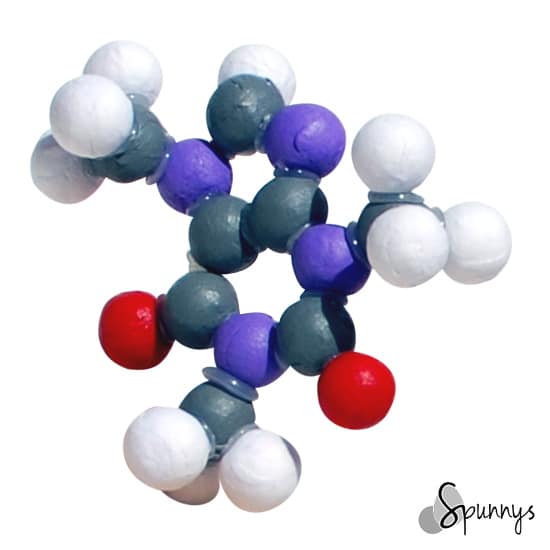
Creating molecular models doesn’t have to be expensive or complicated. In this easy DIY tutorial, you’ll learn how to make beautiful and inexpensive molecular models using spun paper balls. These lightweight, eco-friendly craft balls are perfect for building atoms and molecules for school projects, science displays, and educational crafts.
As an example, we’ll show you how to build a caffeine molecule model, but the same method can be used for many other molecular structures.
DIY Molecular Models – Materials Needed
⚠️ Safety Note: This is an adult craft project only. It requires the use of a hot glue gun and is not suitable for children.
Spun paper balls are ideal for representing atoms in molecular models.
Use smaller balls for smaller atoms such as hydrogen, and larger balls for bigger atoms such as carbon and oxygen.
For the caffeine molecule model shown here, we used 15 mm (0.6 inch) spun paper balls.
Spun paper balls are lightweight, easy to paint, and made from renewable paper — making them an eco-friendly alternative to traditional molecular model kits.
- Acrylic paint and paintbrush
Spun paper balls are sold plain white and should be painted to represent different elements.
- Hot glue gun
- Bamboo skewers (optional)
Helpful for holding the paper balls while painting.
Step-by-Step Directions to Build Molecular Models:
Step 1: Paint the Atoms
Insert a bamboo skewer into each spun paper ball to hold it while painting.
Paint each ball according to the element you want to represent (for example: black for carbon, red for oxygen, white for hydrogen).
Place the skewers in a container or cup and allow the paint to dry completely.
Step 2: Assemble the Molecule
Once the paint is dry, use a hot glue gun to connect the spun paper balls together in the shape of your molecule.
Displaying Your Molecular Model:
To showcase your finished molecular model, you can glue it onto:
- A wooden base or pedestal
- Cardboard or foam board
- A display stand for science projects
Start with simple molecule models and gradually move on to more complex structures such as:
- Organic chemistry molecules
- DNA models
- Protein models
Why Use Spun Paper Balls for Molecular Models?
Spun paper balls are a popular crafting material for educational and creative projects because they are:
- Affordable and lightweight
- Available in many sizes
- Easy to paint and glue
- Eco-friendly and made from renewable paper
- Perfect for DIY science models and classroom crafts
They’re an excellent alternative to expensive molecular model kits while still producing professional-looking results.
Perfect for Science Displays and Creative DIY Projects
Whether you’re a teacher, student, or DIY enthusiast, building molecular models with spun paper balls is a fun and hands-on way to explore chemistry concepts.
These versatile craft balls can also be used for ornaments, floral designs, miniature scenes, mixed media art, and many other creative projects.
We hope you enjoyed this DIY molecular model tutorial!
If you have any questions about making molecular models with spun paper balls, feel free to leave a comment below, we’re always happy to help.
Happy crafting!