

Spun paper shapes are lightweight, white paper craft blanks used for refined DIY projects such as crepe paper flowers, botanical stems, ornaments, berries, miniatures, and elegant seasonal decorations.
You may have seen these shapes called “spun cotton shapes” before. We used that term for many years too, because it is the name many crafters know. But technically, our shapes are made from paper, not cotton.
That is why we now prefer the more accurate name: spun paper shapes.
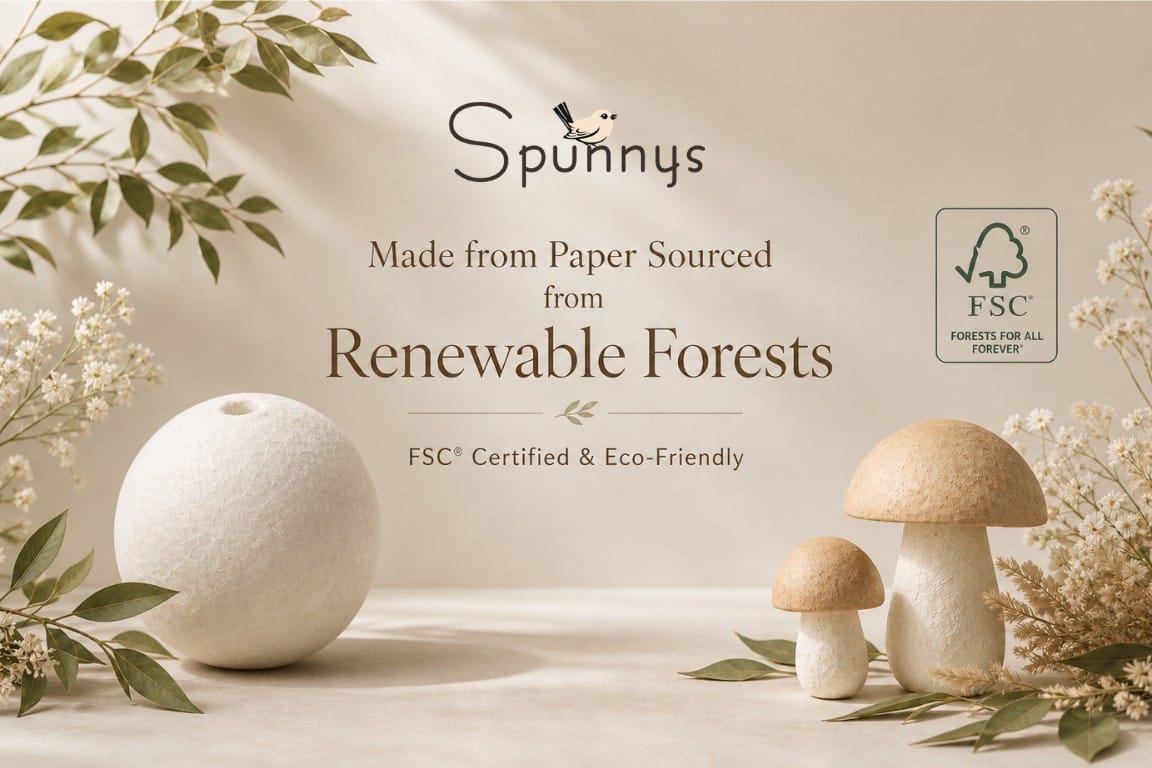
Spunnys shapes are made in Germany from FSC-certified paper. They are matte, lightweight, easy to paint, easy to glue, and ready to decorate.
Why are they sometimes called spun cotton shapes?
The term “spun cotton” has been used for a long time in the craft world, especially for vintage-style ornaments and traditional European decorations.
Part of the confusion likely comes from translation. In German, spun paper balls are often called Watte Kugeln. The word “Watte” can be translated as cotton, wadding, or padding, which may explain why the English craft world adopted the term “spun cotton.”
Real spun cotton art does exist, but it is different. It usually refers to handmade cotton forms wrapped and shaped around a frame or wire.
The white craft blanks sold by Spunnys are different. They are made from paper.
Why Spunnys now says “spun paper shapes”
For years, “spun cotton shapes” was the term most customers searched for, so we used it too. But the material itself is paper. Since Spunnys is built around beautiful paper-based craft materials, “spun paper shapes” is a better fit.
It also reflects what we love most about these products:
- They are made from paper
- They are plastic-free
- They have a matte, natural surface
- They are lightweight and easy to use
- They are ideal for refined adult craft projects
You may still see the phrase “spun cotton shapes” in older tutorials or craft references, but going forward, we use spun paper shapes whenever possible.
What are spun paper shapes made of?
Spun paper shapes are made from paper fibers that are formed into three-dimensional shapes.
The finished surface is matte white and slightly textured. It feels natural, not shiny or plastic-like. This makes the shapes very easy to paint, glue, pierce, and decorate.
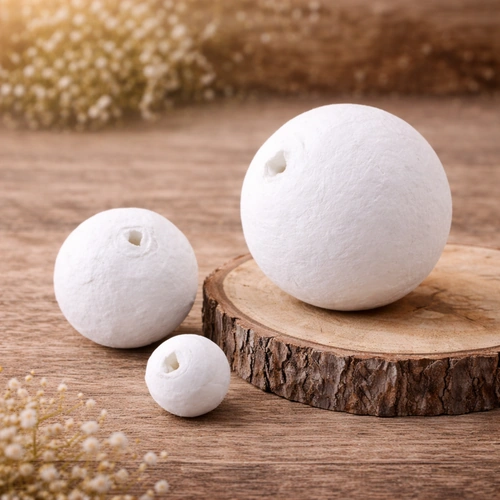
The shapes also have a small manufacturing hole on one side. This is a normal part of the production process and can be useful for inserting floral wire, toothpicks, skewers, or other craft supports.
What makes spun paper shapes useful?
Spun paper shapes are simple, but they are surprisingly versatile.
They work especially well for projects where you need a lightweight, paintable base with a clean shape and a natural surface.
They are easy to paint
You can paint spun paper shapes with acrylic paint, watercolor, gouache, or other craft paints. Their matte paper surface accepts color well and does not feel slippery.
This makes them useful for berries, flower centers, ornaments, miniature fruit, decorative accents, and many other small details.
They are easy to glue
Because they are made from paper, glue adheres very well to them.
You can cover them with crepe paper, tissue paper, fabric, fine decorative paper, lace, ribbon, trims, or other lightweight materials. They are especially useful in paper flower making, where a small round or egg-shaped base can become a center, bud, berry, or botanical detail.
They are lightweight
Spun paper shapes are very light compared with wood, clay, glass, or ceramic. This makes them useful for stems, hanging decorations, ornaments, garlands, wreaths, and delicate floral work.
A branch made with spun paper balls will stay much lighter than one made with heavier materials.
They are plastic-free
Spun paper shapes are a paper-based alternative to plastic foam craft blanks.
They are not the same as foam balls. Their surface is more natural, more matte, and more suitable for refined craft projects.
Popular uses for spun paper shapes
Spun paper shapes can be used in many kinds of adult craft projects. At Spunnys, we especially love them for refined, nature-inspired designs.
Crepe paper flowers
Small spun paper balls are often used as flower centers, stamens, buds, or decorative details in crepe paper flowers.
They can be painted, covered with crepe paper, glued onto wire, or used as a base for more detailed floral work.
Berries and botanical stems
Small balls are perfect for making berries, seed pods, and botanical branches.
You can insert floral wire into the small hole, paint the ball, and build delicate stems for wreaths, arrangements, paper flowers, or seasonal decor.
This is one of our favorite uses because it shows the elegance of the material without making the project feel childish.
Ornaments and decorations
Spun paper shapes can also be used for lightweight ornaments and seasonal decorations.
They are easy to paint, cover, or embellish, and because they are made from paper, they feel warmer and more natural than plastic blanks.
Miniatures and small decorative details
Small spun paper balls and eggs can be used for miniatures, dollhouse details, botanical models, small fruit, flower buds, tiny ornaments, and many other delicate projects.
Their light weight and simple white finish make them a flexible starting point.
Which spun paper shapes are the most useful?
Spun paper shapes exist in many forms, but the most versatile shapes are usually the simplest ones.
At Spunnys, we especially recommend:
- Small spun paper balls for berries, flower centers, stamens, ornaments, and small decorative details
- Small spun paper eggs for buds, mini eggs, ornaments, and seasonal decorations
Smaller sizes are often the most useful for refined craft work. Balls from about 6 mm to 25 mm are especially practical, because they are easy to paint, easy to wire, and elegant in finished projects.
Small eggs, especially from about 12 mm to 30 mm, are also very useful for botanical and seasonal work.
How to work with spun paper balls
Paint them
Hold the ball with tweezers, a toothpick, or a small piece of wire. Apply paint with a fine brush and let it dry completely.
For berries, you can use several shades of the same color to create a more natural effect.
Insert floral wire
Many spun paper balls have a small hole on one side. You can insert floral wire into the hole with a small amount of glue.
This is useful for making berries, flower centers, stems, and botanical branches.
Cover them with crepe paper
For a softer handmade look, you can cover a ball with crepe paper or tissue paper.
This works well for flower centers, buds, and decorative accents.
Glue them onto projects
Because they are made of paper, spun paper balls can be glued directly onto wreaths, ornaments, cards, floral arrangements, or other handmade pieces.
Are spun paper shapes the same as papier mâché?
No. Spun paper shapes are not papier mâché.
Papier mâché usually refers to paper strips or paper pulp layered with glue or paste, often by hand, over a form.
Spun paper shapes are made using a different process. Paper material is formed into a shape, creating a lightweight, smooth, matte craft blank that is ready to decorate.
Are spun paper shapes toys?
No. Spunnys products are craft components, not toys.
Small shapes can be a choking hazard and are not intended for children. They are designed for adult craft projects, decorative work, and creative use by makers who understand how to handle small parts safely.
Why choose Spunnys spun paper shapes?
Spunnys focuses on high-quality white spun paper shapes made in Germany.
We love these shapes because they are simple, beautiful, lightweight, and incredibly useful for refined craft work. They are especially well suited to paper flowers, botanical decorations, ornaments, berries, and small handmade details.
Our goal is to offer craft materials that feel natural, elegant, and timeless.
Not plastic.
Not childish.
Not overly complicated.
Just beautiful paper shapes, ready to become something special.

